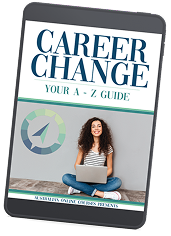

In your 30s, you probably have an established career after investing your 20s in education or on-the-job work experience. You may have a formal degree and a debt to pay, or be in a comfortable position at a company that’s supported your growth over the past decade or more. So, it’s easy to understand why you might feel hesitant to change careers at this age and stage in your life. The good news is that your 30s are, in fact, an ideal time to jump ship, whether to a different role in a similar industry or a completely new career. Why? In this blog, we explore the benefits of a career change at 30 and the steps required to find your new direction at this age.
5 Steps to Career Change at 30
So, you’re in your 30s, and you’re thinking about changing careers? You might be bored, dissatisfied with your salary, work hours, or the amount of stress in your current role. Whatever the reasons for your discontent, there is hope of finding a new career in your 30s. A career change at 30 (or during this decade) may feel overwhelming, but it’s also an exciting opportunity to make a significant change that better suits what you value now and where you want to go in the future.
Let’s take a look at the five steps to successfully finding a new direction in your 30s.
1. Consider What’s Important to You
When you started your career in your teens or 20s, you probably decided on a job without the life experience to guide you. Now, in your 30s, you’re most likely more self-aware and understand what values best align with your ideal role.
Instead of asking yourself, “What career should I pursue now?” a better question to consider is, “What do I want my life to look like?” Think about the skills you enjoy using in your current role, the lifestyle you desire, such as flexible hours, a higher income, or less stress, and the values that are most important to you. While job titles may change over time, these core values will remain constant and can help guide you toward roles that are best suited to your current stage in life.
2. Assess Your Transferable Skills
It might feel like it, but you’re not starting from scratch, even if you decide to pursue a completely different career. In your 30s, you’ve built valuable skills through work, education, and life experience. So, make a list of any and all transferable skills you’ve gained in your current career.
Transferable skills are not necessarily directly related to your job but are important across many industries and helpful in many areas of life. You may have acquired your transferable skills through voluntary work, hobbies or even parenting – basically a culmination of your lived professional experiences so far.
Transferable skills might include the following:
• Leadership
• Project management
• Problem solving
• Communication skills
• Adaptability and flexibility
• Interpersonal and Intrapersonal skills
• Improving processes.
These valuable transferable skills are often more important than direct experience and provide a strong foundation for a career pivot.
3. Close Skill Gaps via Professional Development
Once you know where you’re headed, identify only the specific skills you need to bridge the gap between the career you have and the one you desire. In many cases, you might find that short online courses, certifications, micro-credentials, or hands-on projects are enough. There’s a tendency to assume you need to return to a multi-year university degree, but practical, targeted professional development and your prior experience may be all you need to find your new direction.
Professional development can be:
- Online courses & micro-credentials – short, targeted learning to build specific, in-demand skills and demonstrate your capability.
- Professional certifications – industry-recognised credentials that validate expertise and commitment.
- Side projects & portfolio work – self-directed projects that apply new skills in practical, visible ways.
- Freelance, contract, or project-based work – low-risk opportunities to gain experience and test a new career direction.
- Volunteer – hands-on experience, references, and exposure in a new field or industry to explore before committing.
- Mentorship & career coaching – guidance, feedback, and direction during a transition, either through formal or informal mentorship or coaching.
- Join professional associations & industry communities – ongoing learning, credibility, and connection within a specific field.
- Networking & informational interviews – first-hand insight into roles, industries, and career paths through networking with those with experience.
- Resume, LinkedIn & personal brand development -updating experience to highlight new skills and desire to pursue a new direction in your career.
- Interview preparation & career storytelling – learning to confidently communicate transferable skills and value for a career change.
- Leadership & soft skills development – transferable strengths such as communication, influence, and decision-making.
- Workplace experience & employer-funded training – on-the-job professional development that reduces personal risk and cost.
- Mindset, confidence & career suitability – minimising fear, burnout, and identity crisis that often accompany any kind of change.
4. Test the Waters Before You Commit
It’s beneficial to explore your new career options before fully committing, especially if it requires significant financial investment or time to develop necessary skills for success. Why not explore your new direction in some low-risk ways first? You could try your hand at freelancing, take on a side project, volunteer in your community, or do contract work to see if the reality of your new career matches your expectations. This is the perfect step to build your confidence and bolster your experience, and who knows, it might even lead to a few unexpected job opportunities without the pressure of an all-or-nothing leap of faith.
5. Master Career Storytelling
We all have a story to tell, and how you share yours determines the success of your career change. If you do just two things, make sure it’s updating your resume and LinkedIn profile to promote relevant skills and achievements, not simply outdated job titles.
In interviews, explain your experience as a natural progression, highlighting how your background uniquely qualifies you for the next step in your career. You will most likely find that employers couldn’t care less about where you started and are more interested in how you add value to their team or organisation now.
A career change at 30 doesn’t need to be a setback. So, reframe it as a strategic move for your long-term work and life satisfaction. When you know where you’re headed, have intention, and follow the right steps, you can move into work that pays better, fits your lifestyle, and feels meaningful in the long term. Our online professional development courses and micro-credentials can help support steps 2 to 4.
In your 30s, you can take advantage of an early-career pivot. At this stage of your career journey, you can afford to take calculated risks, and you can take advantage of early experiences and skill up fast through online learning and micro-credentials.
Your New Direction Starts with One Decision
If you’re thinking about a career change at 30, it starts with making a commitment to change. Whether that’s taking a short course to bridge skills gaps, volunteering in your community or taking on freelance projects, your new direction is just one decision away.
Can we help you find your new direction? Contact one of our friendly Course Consultants today on 1300 76 2221, via Live Chat, or Online for more information.