
You’ve probably heard of CBT (cognitive behavioural therapy) in relation to mental health, but some of the ideas behind it can be surprisingly helpful at work too. We all deal with stress at work, whether from tight deadlines, office politics, or misunderstandings, which can throw off our mood and impact productivity.
CBT-inspired strategies, such as challenging unhelpful thoughts or stepping back to look at the facts, can help you stay calm, communicate clearly, and handle challenging moments. They’re simple, practical habits that can help you show up as your best self at work.
In this blog, we explore what CBT is, why CBT techniques for work are beneficial and seven effective strategies to try.
Cognitive behaviour therapy (CBT) is a type of psychotherapy based on the idea that your thoughts affect your behaviour, actions and how you feel. Understanding how you think helps you better manage difficulties in your life.
Adopting CBT techniques at work is invaluable, as the workplace can be a stressful place, which can trigger automatic and often distorted thinking. The good news is that thoughts can be reframed, leading to calmer and clearer thinking and responses.
So, let’s take a look at 7 CBT-inspired ways to not just survive but thrive at work.
Thought channelling in CBT is about recognising and reframing unhelpful thoughts and creating a more realistic perspective. It involves identifying negative thought patterns and shifting this thinking. How often have automatic and unhelpful thoughts led to reactions like frustration, defensiveness or withdrawal at your workplace?
Steps
1. Notice the emotional reaction
2. Question, what thought led to the reaction?
3. Write down the thought
Workplace scenarios
• “My boss emailed me, ‘Can we talk?’ means ‘I’m in trouble.’
• “They didn’t reply, so that means they’re ignoring me”
In the above situations, a reframe might look like my boss emailing to ask to talk, which could be about something negative, but is just as likely to be about something neutral or positive. Similarly, if a colleague doesn’t reply to a message, it could mean they’re busy or they inadvertently missed the message.
The STOP method is a quick, practical workplace tool that can help you pause before saying or doing something you might regret later. It’s an acronym for:
• Stop
• Take a breath
• Observe your feelings/thoughts
• Proceed with intention
Workplace scenario
Before replying to a stressful email, pause and take a deep breath for 5 seconds. Wait until your emotions are less intense so that your reply is considered and rational.
Behavioural experiments are CBT-inspired techniques that go one step further than thought-channelling to test assumptions, building evidence-based thinking rather than fear-based decision-making.
Workplace scenario
If you think, “My coworker always ignores my ideas,” try:
• Presenting one idea clearly and concisely
• Asking for feedback
• Observing what actually happens
You might be surprised that your assumptions are largely incorrect and negatively skewed. When you repeat this process regularly, you’ll get a more realistic assessment of how others are perceiving you.
A thought record is a worksheet often used in CBT to help people identify, question and reframe unhelpful thoughts that contribute to stress. In the workplace, it’s also a helpful strategy because it enables you to slow down and separate what’s happening from how you’re interpreting it, gaining a clearer, more balanced perspective.
There are seven steps in this process:
1. Situation
2. Emotion
3. Automatic thought
4. Evidence for
5. Evidence against
6. Balanced response
7. Action
Workplace scenario
A coworker uses a sharp tone → your emotion = irritation → your thoughts = “They don’t respect me” → reframed response.
It’s not easy to remember all these steps in the heat of the moment, but if you recall gathering evidence for and against your thoughts about a situation, this will help you use thought records successfully.
CBT-inspired strategies are not just mental processes, they’re also very practical. Problem-solving is a strategy you can easily use when stress is a practical problem at work. It can help you move from feeling overwhelmed to taking action confidently. You can think of it as a way to handle workplace challenges logically instead of emotionally.
There are five steps in the problem-solving process:
1. Identify the problem
2. Brainstorm options
3. Evaluate pros/cons
4. Pick the best option
5. Try it, and review the outcome
This strategy helps with conflict, workload stress, communication breakdowns and many other workplace challenges.
Gradual exposure practice is an ideal strategy if your work stress is triggered by a specific situation you want to avoid. When you incorporate this CBT-inspired strategy into your workday, you can build confidence by slowly increasing exposure to feared tasks.
There are four steps in gradual exposure practice:
1. Identify the feared task
2. Build a fear ladder (each step is a mini challenge)
3. Start with the first step and repeat until you’re confident to move up
4. Move up the ladder gradually at your own pace
Workplace scenario
I’m anxious about giving a presentation at work. Create a fear ladder that starts with the easiest, safest steps and gradually builds towards the most difficult, high-anxiety task.
Fear ladder
Imagine yourself giving the presentation by visualising yourself speaking confidently. If anxiety comes up, stay with it until the fear decreases.
Read the presentation out loud while alone, focusing on hearing your own voice until it feels less awkward.
Practice the presentation out loud as if you’re presenting it to the group.
Record yourself giving the presentation and watch or listen to it back until it feels comfortable
Practice in front of one trusted person, whether it’s a supportive family member, friend or work colleague. Ask for feedback and take it on board.
Practice in the workplace meeting room.
Deliver the workplace presentation to the group.
You’ll most likely find that the ladder is the most effective and kindest way to challenge your fears, rather than white knuckling it to the final task.
Sensory grounding (5-4-3-2-1) is an ideal way to refocus during high-pressure moments or when anxiety spikes at work. It’s a very practical way to bring your mind back to a calm and rational state by focusing on the present moment. It works because when you’re in a highly stressful situation, your thoughts and emotions can spiral into catastrophic thinking. Sensory grounding helps interrupt this cycle by grounding you in something real, immediate, and physical in your surroundings.
Workplace scenario
You feel rising anxiety before you need to have a difficult conversation with a manager or work colleague.
Notice:
• 5 things you can see (items on your desk, colours in the room, plants, furniture, artwork)
• 4 things you can touch
• 3 things you can hear
• 2 things you can smell
• 1 thing you can taste
Grounding helps you return to a calmer and more centred state so you can problem-solve and communicate with clarity and confidence.
We hope these CBT techniques are helpful for you at work when you encounter a problematic situation or colleague. Remember, while they can feel a little awkward at first, when practised over time, your ability to use these skills will improve and as a result, so will your wellbeing!
Can we help you find professional development opportunities? Contact one of our helpful Course Consultants today on 1300 76 2221, via Live Chat, or Online for more information.
Disclaimer: We provide guidance on learning and development only. This content is not a substitute for psychological advice or professional mental health care.
Hustle culture is alive and well, so the idea of taking a break to achieve more might not sit well until you look at the psychology and neuroscience. You see, brain breaks aren’t just for children in the classroom, though these are crucial too; they’re a clever way to boost productivity at work.
So, next time you’re locked into back-to-back Zoom calls, juggling deadlines and trying to maintain high professional standards, try an adult brain break. You’ll find it’s not just a luxury, but a cognitive necessity that helps super-charge your day.
In this blog, we’ll explore 25 adult brain breaks that work, why they boost productivity and how you can implement them into your workday successfully.
Research shows that the adult brain can maintain peak focus for only limited periods before attention and performance start to decline. It turns out that breaks can help restore focus, reduce mental fatigue, and even spark creativity. Whether it’s a quick walk, mindful breathing, or taking a break from a screen, these micro-breaks are productivity tools that are backed by science.
These adult brain breaks provide physical movement, which is so important for those of us who spend much of the workday seated behind a desk.
The first one is crucial for those of us sitting at a desk all day. Take the time to stand up and stretch your arms, legs, neck, and back to release tension. You’ll boost your circulation and reduce physical fatigue with this brain break!
You might not achieve a downward dog, but there is a series of seated stretches that will help you reset your focus. Try the following:
Take a brisk walk around the office (or home) to get your blood circulating and refresh your mind. Even just a five-minute brisk walk will help you feel more focused and productive.
They’re not for everyone, but if you have the energy and the confidence, try some jumping jacks. This brain break gives you a quick burst of energy that sets your heart rate pumping and re-energises your body and mind.
Stand and sit back down repeatedly, using your chair for support. This low-impact exercise stimulates blood flow without leaving your workspace.
A few quiet adult brain breaks for times when you need to reset without movement or drawing attention to yourself. These exercises can be done at your desk or workstation discreetly.
Take deep breaths using the box breathing technique (inhale for 4 seconds, hold for 4, exhale for 4) to clear your mind and reduce stress.
Close your eyes and listen closely to the sounds that surround you at work. This can help ground you in the present moment.
Pop in some earphones and access a free app like Calm to guide you through a short meditation session focused on relaxation.
Picture yourself in a peaceful place, whether you feel most at ease on a beach, in a forest, or on a mountain top. Just picturing yourself in tranquil surroundings helps lower your stress and reset your focus.
Mentally scan your body from head to toe, noticing where tension may be held and consciously relaxing each muscle.

When only a creative adult brain break will do, give these fun exercises a go. They’ll give you a boost to successfully (and productively) finish your day.
Let your creativity flow by drawing or doodling on a notepad or using a calm colouring book for adults. This helps reset your mind and spark new ideas.
Solve a quick crossword, Sudoku, or logic puzzle to exercise your brain and shift your focus for a few minutes. You’ll be back to business with renewed focus in no time – we promise!
Take a few minutes to laugh! It’s the best medicine. Why not watch a light-hearted video or short clip online? Laughter is a proven stress reliever after all.
Buy a beautiful journal that’s exclusively for writing down your thoughts, feelings, or ideas. You’ll be surprised how quickly you can clear your mind and improve focus when you return to work.
Learning is a lifelong adventure, so watch a tutorial on something new, whether it’s learning a few words in a foreign language or a simple craft. You could also give one of our micro-credentials a go, and boost your professional development while you’re at it!
We all need some screen-free time to recharge, so make sure you plan some digital detox adult brain breaks throughout your busy day.
Step away from all screens, yes, that’s laptops, phones and tablets, for at least five to ten minutes during your workday to give your eyes and brain a much-needed break.
If you can go outside for a few minutes, a breeze will boost your brain. A quick burst of fresh air can improve your mood and creativity.
A change is as good as a holiday, right? So, rearrange your desk or change the view to give your brain a visual reset.
So, if you can’t tune out from screens completely at work, try putting your phone away for a while. Switch to airplane mode for a break to avoid distractions and give your mind a chance to relax.
Look at nature photos or, even better, go for a walk in a park, and let nature work its magic. Green space is shown to reduce stress and improve mental clarity.
If you’re feeling social, let that be your cue to connect with a friend or colleague who can lift your mood.
Take a brief, casual conversation with a coworker to bond and shift your mind away from work. This could even be a virtual coffee break.
Give a quick compliment to a colleague or friend. It boosts positivity and improves your mood.
A quick, light-hearted call to a friend or family member can refresh your mind and improve your mental well-being.
Take a minute to share something fun and engaging with your coworkers to create a moment of connection and positivity.
Send a quick thank-you message or email to someone who’s helped you recently, boosting both their mood and yours!
If you’re looking for a more in-depth solution to boosting your productivity, take a look at our Develop Personal and Work Priorities course. This micro-credential is designed to increase your performance by monitoring progress, analysing feedback, and continuously updating your work priorities to align with changing circumstances.
We hope you feel inspired to embrace the adult brain breaks you need to power you through your workday. But if you’d like more help with your professional development, contact one of our Course Consultants today on 1300 76 2221 or use Live Chat.
You don’t need to be in therapy to understand the benefits of psychology in the workplace. In this blog, we will explore six important psychological principles that significantly impact professional development and career success. Understanding these principles can boost your relationships, improve productivity, and contribute to a more positive work environment.
These six principles offer valuable insights into human behaviour and motivation, providing you with the tools to navigate challenges and achieve your career goals. Whether you’re looking to improve your leadership skills, enhance team collaboration, or boost your personal growth, psychology in the workplace can fast-track your professional success.
Cognitive dissonance is the discomfort we feel when our actions don’t match our beliefs. More specifically, it’s a psychological tension that occurs when you hold two or more conflicting beliefs, values, or attitudes. This internal conflict can lead to stress, reduced job satisfaction, and decreased motivation. Managing cognitive dissonance at work is crucial, as it can be a powerful tool for professional growth, positive change, improved decision-making, and enhanced leadership and integrity.
You want to apply for a promotion at work, but you haven’t enrolled in the professional development course that will make you a suitable candidate.
Confirmation bias occurs when we seek information that confirms our beliefs while ignoring or downplaying evidence that challenges these beliefs. In psychology in the workplace, confirmation bias can lead to poor decision-making, bias in hiring, resistance to change, stifled creativity and missed opportunities for growth.
A hiring manager believes remote workers are less productive and unreliable. When one remote employee misses a deadline, she sees it as proof but ignores the three remote workers who delivered early.
Habit loops are the psychology in the workplace that involve small wins gained via a neurological pattern that governs a habit. The loop has three key parts, including cue (the trigger that tells your brain to start a behaviour), routine (the behaviour itself) and reward (the benefit that reinforces the habit). It’s a concept made famous by Charles Duhigg, author of The Power of Habit, and is crucial to understanding habit formation. In the workplace, positive habit loops support productivity and team growth, but negative loops can sabotage focus and performance.
A manager feels stressed after reading a difficult customer review via email, so they scroll social media to escape the discomfort and feel temporarily distracted.

The halo effect is a cognitive bias in which a strong first impression can influence how someone is viewed long-term. In this psychology in the workplace principle, a strong first impression, appearance, or a single success can lead others to assume competence in many areas, whether true or not.
Jason is outgoing and funny in meetings, making him well-liked by the team. As a result, he’s seen as highly productive when in reality he misses deadlines and relies on others to complete his tasks.
The Zeigarnik Effect is a psychological phenomenon in which our minds hold onto incomplete tasks more than completed ones. This ongoing mental tension motivates us to want to finish what we start, even if we have stalled or moved on. In a career context, unfinished tasks can drain focus, increase stress and reduce productivity. However, this effect can also strategically boost motivation and encourage momentum.
Jane can’t stop thinking about an unfinished report and feels mentally cluttered because she has too many unfinished tasks—she stays late every day for weeks to complete it.
Priming is a psychological effect in which exposure to certain stimuli (words, images, and experiences) influences our thoughts and behaviour, often unconsciously. In the workplace, priming can impact your mood, performance, decision-making, and even how others perceive you, often without anyone realising this is happening.
Before a team brainstorming session, a manager shows a short video about innovation at Apple.
You don’t need to see a therapist to benefit from psychology in the workplace. Simply apply psychological principles, such as cognitive dissonance, habit loops, confirmation bias, the Zeigarnik effect, and priming, to understand your behaviours and improve how you work, manage, and develop in your career. We hope these insights boost your self-awareness and lead to better decision-making, stronger relationships, and long-term professional success.
Can we help you with professional development at work? Simply contact one of our Course Consultants today at 1300 76 2221 or via Live Chat for information and support.
Creativity, a soft skill that has long been celebrated as the cornerstone of innovation and problem-solving in the workplace, is a key driver of unique ideas and a fresh perspective when tackling challenges. Unsurprisingly, this dynamic skill is ranked highly in the World Economic Forum’s (WEF) latest Future of Jobs survey, with creativity projected to be among the top five skills that companies will demand by 2025. In fact, the report’s findings reveal that creative thinking is the second most important skill in the workplace.
Fortunately, creativity is not a fixed trait but a skill that can be developed and enhanced over time. This self-improvement is open to anyone, whether you’re a business manager, copywriter, freelance writer, or work in any role that requires innovative thinking. We’ve compiled a list of top tips to help you enhance your creativity as an individual or a manager in the workplace, putting you in control of your creative potential.
Creativity is an essential skill that can help you grow both personally and professionally. When you develop your ability to think creatively, you can come up with innovative solutions that make problem-solving more successful. This skill is especially valuable in jobs that require strategic thinking and adaptability.
Steve Jobs once said, “Creativity is just connecting things”. Creative people can connect experiences they’ve had and synthesise them into new ideas. This involves paying close attention to processes, ideas, and methods used in other areas of life, as well as asking yourself how you can find and define inspiration from outside the office and repurpose it in your role and responsibilities.
Humans are visual creatures, and what we see often shapes what we think. Hence, it’s essential to cultivate a workspace that enables us to reflect. In terms of how to be more creative, according to the Journal of Environmental Psychology, dimming lights can downplay a room’s distractions, which encourages the generation of ideas and freedom of thought. A too-bright computer screen can also lead to eye strain, which is certainly not conducive to creativity!
According to ResearchGate, ambient noise — around 50 to 70 decibels — can enhance creative thinking. This is because a low level of noise “increases processing difficulty, inducing a higher construal level and thus promoting abstract processing, which subsequently leads to higher creativity”. High noise levels, on the other hand, can impair creativity.
Although a tidy workspace can enhance productivity, research also shows that creativity can be increased with a little mess! An article published by the Association for Psychological Science claims that “being creative is aided by breaking away from tradition, order and convention, and a disorderly environment seems to help people do just that. Orderly environments, in contrast, encourage convention and playing it safe”.
In terms of how to be more creative, changing things up can help improve our brain’s neuroplasticity and help rewire its creative side, according to the book How We Learn by Benedict Carey. This is because our brains are wired to favour security and stability. Suggestions include changing your gym workout, finding an alternative way to get to work, or eating your lunch in a new location.
According to online mental health provider Lysn, one of the most underrated benefits of exercise is what it can do for your mind. When we exercise, we release endorphins. This provides an instant mood boost and enhances forms of thinking. It can also allow us to tap into a more extensive spectrum of our imagination and generate more original ideas.
Another element to consider if you are wondering how to be more creative is to practice mindfulness. According to Headspace, mindfulness is the quality of being present and fully engaged with whatever you are doing, being free from judgement or distraction, and aware of your thoughts and feelings without getting caught up in them. A few strategies to try include breathing exercises, meditating, taking a walk outdoors, limiting social media time, and listening to calming music.
Most problems have a solution – they just need to be discovered! Creativity often involves divergent thinking, and three great questions to ask yourself are “What if?”, “What’s a better way to …?” and “How might I …?” Putting these into practice daily can help build your creative muscle and boost your confidence in your ability to generate innovative ideas.
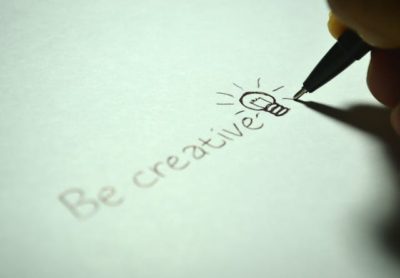
Find your lightbulb moment by developing creativity at work
Creativity has a business return on investment (ROI) because there is a solid connection between creativity and business value. In fact, a global study by Adobe found that when companies invest in creativity:
If you are a business manager, here are some ways you can cultivate a creative work environment and guide your employees to be more creative.
Flexible, pressure-free brainstorming in a relaxed setting is one of the best ways for employees to generate new ideas. Whether on a whiteboard or on good old-fashioned butcher’s paper, encourage them to scribble down ideas unprompted. It can enhance creativity and generate new ideas. But it also shares the load of innovation and encourages employees to work together to create viable solutions to problems.
Sometimes, employees may feel a little intimidated by making suggestions publicly, even when encouraged. They may have general anxiety, a fear of embarrassment, or other reasons for not freely speaking their minds. One way of removing social barriers is by allowing employees to share their ideas anonymously. Whether via a suggestion box or an online survey that guarantees confidentiality, it will show them that their suggestions are valid and their creativity valued.
If employees think their ideas will be acted on and implemented, they’re more likely to offer suggestions. Once you’ve determined an idea will be a success, let your employees know how the idea came to be. This will encourage employees to be more creative at work by increasing their motivation to contribute.
It sounds simple, but let your employees know you value their thoughts and appreciate their individuality. Make it clear that you see them as unique individuals rather than simply employees. Most people will respond well and reward you with their ideas and insights.
Diversity in the workplace contributes to an atmosphere of creative thinking, so consider hiring employees from different fields and different educational and cultural backgrounds. Encouraging multicultural diversity, in particular, is essential as we live in a multicultural society, so embracing differences and developing cultural competence is crucial.
We hope these tips will help you consistently practice creativity in the workplace to improve your skills, embrace opportunities and drive meaningful change. There’s also value in pursuing diverse experiences and embracing an open-minded approach to learning to significantly boost your creative abilities. This ongoing development of your creative powers can lead to improved job performance, enhanced career prospects, and the ability to adapt to rapidly changing industries.
We commonly associate mental health with what’s wrong – such as depression, anxiety and other illnesses. But those who understand wellness know that mental health is also about what’s going right. How long since your last mental health check-up? Because, as we’re now realising, mental health is just as critical as physical health to longevity. Here are nine wellbeing strategies that might help you (or your clients) live better!
Relationships are vital to your mental health and wellbeing. This wellbeing strategy is the foundation that helps you get through the difficult times and to celebrate the happy moments in life. If you’ve lost some of your connections, whether with friends, family or colleagues, take the time to rebuild. You’ll enjoy a better state of mind and a more full, enjoyable life when you share it with others. If it’s difficult to find social avenues to connect with people, invest in a hobby or volunteer work that gets you into a positive social group – perhaps it’s book club or work with Meals on Wheels.
The lifeblood of personal development and growth – learning! When you keep your brain active, you’re mentally healthier and better prepared to take on new challenges. Learning new things also boosts your self-esteem and self-confidence. So, whether you want to learn to plant a garden, communicate with confidence or change your career, you’re doing your health good when you invest in your education. After all, education is one thing that no one can take away from you!
Regular, planned exercise is a wellbeing strategy that will boost your mood, reduce stress, and even improve your sleep. The trick is to make it a habit. Habits are best (and most quickly adapted) when you do something every day at the same time. So, if getting up at 5 am for a 10km run isn’t your idea of a good time, don’t do it! Set a time of day when you feel most energetic, and your time is your own. You can learn more about the critical role of physical activity and movement in our wellbeing course.
Generosity is a bit underrated (if you ask us), and it’s a shame because it’s so good for you. In fact, evidence suggests that during gift-giving, we secrete “feel good” chemicals in our brains, such as serotonin (a mood-mediating chemical), dopamine (a feel-good chemical) and oxytocin (a compassion and bonding chemical)! And just like exercise and a healthy diet, generosity may increase your lifespan, according to a study.
Did you know that curious people are happier? Research is proving that being curious is linked with psychological, emotional, social and health benefits. One study shows that curiosity is associated with increased positive emotions, lower anxiety, greater satisfaction with life and better psychological wellbeing. Of course, maybe happier people are just more curious. Regardless, discovering something new does make us feel good – so it’s likely this relationship travels in both directions. So, get curious about life!
If you’re holding onto grudges, it’s time to let go. Research has shown that forgiveness is linked to better mental health outcomes, including reduced depression, anxiety and major psychiatric disorders. It’s also linked with fewer physical health symptoms and lower mortality rates! So, forgive those who’ve wronged you and make amends with those who feel wronged by you. It’ll make you a happier, healthier person.
How much time do you spend out in nature? If you’re a city (or suburb) dweller, make time to travel into a forest now and then for your health’s sake. It turns out that spending at least 120 minutes a week in nature is associated with good health and wellbeing. In Japan, the nature as medicine exercise is called shinrin-yoku, also known as forest bathing, and its benefits are legendary. In fact, in Japan, over 40 decades of research into shinrin-yoku has led to it being prescribed by health professionals.
Have you heard of “good mood foods”? They’re the foods that boost our energy, alertness and state of mind, but they’re not the type you might think. If you’re thinking stimulants – caffeine – or sugar- glucose hit – you’d be wrong. While these quick-fix choices might do the trick at the moment, you’ll pay for it down the track. Food (and drinks) have a significant impact on our wellbeing. So, what foods should we eat for better health and wellbeing? In a nutshell, fruits and vegetables, whole grains, lean meats, fish, eggs, dairy and lots of water are best. Curious for more? Learn about nutrition and mood foods in our wellbeing courses.
If you have a health device, such as an Apple Watch, you’ll notice that you’re prompted throughout the day to be mindful. So, why does mindfulness matter as a wellbeing strategy? This ancient practice is about slowing down to be completely aware of what’s happening in the present. It means doing away with being on autopilot. Studies suggest mindfulness helps manage stress, cope with illness, and reduce anxiety and depression.
Whether for your own knowledge or to entertainment your clients, we think these facts about health and wellbeing will fascinate and inform!
If you’d like to improve your own health or your client’s wellbeing, consider our Certificate of Health and Wellbeing. You’ll learn about wellbeing strategies to boost physical, social, intellectual and emotional health and wellbeing to meet the demands of life. Whether for personal gain or to serve clients better through professional development, this course shows you how to optimise all areas of health and wellbeing.
Our online courses are an excellent way to test the waters before investing in further education. If you have any questions, contact one of our friendly Course Consultants via phone, Live Chat or email.
Can you think yourself into a successful career or relationship? Does the power of positive thinking help you to achieve your goals? It might seem like a cliché. But, according to the experts, the power of positive thinking – a part of the positive psychology movement – is the key to unlocking your full potential, whether in your professional or personal life. So, what is positive psychology, and how can you improve your positive thinking powers? It turns out that you can improve your ability to think more positively by taking positive action.
Positive psychology is the scientific study of what makes life fulfilling, focusing on individual and community well-being to improve quality of life. Many studies show that positive emotions and life satisfaction enhance physical health, creativity, relationships, coping skills and connection.
You’ve probably heard motivational speakers preach, ‘You’re the average of the five people you spend the most time with,’ and the adage, ‘Misery loves company.’ Again, this might sound like a cliché, but there’s a lot of truth. If you’re surrounding yourself with negative people, developing and maintaining positivity will be challenging. Try to minimise your exposure to the negativity of others in your life and join groups – whether social, sporting or volunteering – that boost your positivity quota. You could also listen to positive podcasts or audiobooks to fill your positivity cup further.
Volunteering has long been connected to positive mental and emotional health outcomes. It can provide purpose and meaningful experiences to your life, increasing self-esteem and general wellbeing. It’s also widely recognised as relieving stress and symptoms of depression and improving relationships. If you can make time to contribute to your community, your mental and emotional well-being will thank you for it.
Negative thoughts are insidious. They creep in when you least expect it and influence your whole perspective, negatively impacting your life. Keeping a mood diary can help you identify and challenge your negative thinking by replacing every negative thought with a positive one.
Fail to plan, and you intend to fail, they say! So, make sure you’re setting SMART goals. When you’re actively working toward achieving personal or professional development goals, you’re engaging in positive thinking. The act of holding yourself accountable further encourages you to take positive action. Just as negative thinking can be cyclical, positive actions can promote more positivity. So, make a list of what you want to achieve next year and set SMART goals.
In positive psychology, gratitude is strongly associated with greater happiness. Gratitude encourages more positive emotions and is crucial to engage in good experiences fully, boosting health and maintaining strong relationships with others. If gratitude is challenging at first, start noticing even the most minor things that bring joy. Notice if it’s the sunshine after the rain or a home-cooked meal.
According to research, mindfulness can help you learn acceptance skills and notice present-moment positive experiences. One of the simplest ways of incorporating mindfulness into your every day is to focus on the five senses at moments throughout your day. Take a moment to observe what you can see, hear, smell, feel and taste as a way of grounding yourself. Next, focus on your breathing to slow down. When you get accustomed to slowing down, you’ll probably find that you can readily identify every day’s positive aspects.
Laughter is the best medicine! Researchers discovered that positive emotions associated with humour and laughing correspond with understanding the purpose of life and help older people appreciate a positive perspective on the obstacles endured in life. So, if you want to increase positive thought, put on a comedy, read a funny book or learn and tell some jokes!
Positive self-talk is your internal dialogue. It’s often subconscious and influences your thoughts, beliefs and ideas about yourself. If you tune into your self-talk and find a negative Nelly/Nell – it’s time to challenge and change how you talk to yourself. When you change your self-talk, you’ll improve your self-esteem and ability to tackle challenges.
Interested in developing the power of positive thinking? Is negativity holding you back? If so, try incorporating one (or all) of these strategies to improve your positive thinking skills. The law of attraction shows that where your focus goes, energy flows. So, when your focus is positive, your life is a magnet for more positive experiences. And if your professional or personal life needs a positivity boost, browse hundreds of online courses and discover your full potential today.
Whether you’re managing your own anxiety or want to help others manage theirs, our Certificate of Anxiety Management is a practical resource. Awareness is crucial to controlling the escalation of anxiety, and understanding anxiety management techniques will help alleviate this uncomfortable emotion.
If you work with people in a caring, teaching or counselling role, this course will give you the strategies to help clients manage their anxiety. You’ll also learn what constitutes normal anxiety and when to suspect an anxiety disorder. This professional development course will also give you the knowledge and skills to create an anxiety management plan for a client, patient or student in your care.
You’ll discover many anxiety management techniques in this course, plus the following topics:
And more!
Anxiety is a normal emotion that everyone will experience at some point in their life. It’s only problematic when it becomes an anxiety disorder. Anxiety disorders negatively affect a person’s life as it interferes with social, professional, and educational experiences.
Anxiety manifests in many ways and is experienced differently by everyone. Understanding the different types of anxiety disorders and how to implement anxiety management techniques is an important tool for any professional. There are six major anxiety disorders, each with its own challenges and treatment options.
Feeling worried or anxious sometimes, like when preparing for an exam or job interview, is expected. The type of anxiety experienced during heightened stress can help people feel motivated and achieve goals.
So, anxiety can be positive by providing extra energy (mental or physical) to perform at our peak. However, it becomes problematic when this anxiety is experienced every day, even multiple times a day. The types of worry that interfere with life are intense and persistent and can wreak havoc on an individual’s work, family and social life.
Symptoms: excessive worry that work, study or socialising becomes challenging.
While many people may experience a panic attack once or twice in their lives, panic disorder is associated with recurrent and disabling attacks of anxiety (panic attacks) that come ‘out of the blue’ and are followed by a persistent worry that another will occur.
Symptoms: a sense of overwhelming panic or fear; feelings of dying, choking, losing control or going mad; increased heart rate; difficulty breathing (like there’s not enough air); excessive sweating; dizziness, light-headedness or feeling faint.
Individuals with OCD experience intrusive thoughts, obsessions and compulsions that have a profound negative impact on their lives. It is estimated that around two to three percent of Australians (more than 500,000 people) have OCD. The condition is characterised by recurrent and persistent thoughts, images, or intrusive or undesired impulses. People with OCD also perform repetitive behaviours that are excessive and time-consuming. While those with the condition are aware the thoughts and behaviour are irrational, they feel unable to control their obsessions.
Symptoms: repetitive thoughts/concerns not connected with genuine problems; repetitive behaviours; constant checking.
Post-traumatic stress disorder is brought on by a traumatic event that threatens an individual’s life or feelings of safety. As a result, people feel a prolonged sense of fear and hopelessness even long after the event. Around 12 percent of Australians will experience PTSD in their lifetime, with serious accidents being the leading cause of the illness.
Symptoms:
It’s normal to feel some social anxiety when in unfamiliar company or when in the spotlight. Many people will feel anxious about giving a speech at a wedding or presentation at work, but social phobia leads to intense, debilitating fear. People with a social anxiety disorder have a persistent fear of being judged, criticised, laughed at or embarrassed in the company of others.
Symptoms: excessive sweating, trembling, blushing, stammering, nausea or diarrhoea.
A phobia is a fear of a specific situation, activity, animal or object that is irrational and extreme. While many people fear dangerous animals, like snakes, the response is rational if it poses a risk to safety. However, those with a phobia of a snake will avoid any areas where a snake may live and even looking at a photo of a snake causes extreme fear and anxiety. Specific phobias are often related to fear of having a panic attack, so avoidance behaviour is repeated.
Specific phobias are generally catorgorised into the following areas:
Animal – fear of snakes or dogs
Natural environment – fear of thunderstorms or heights
Situational – fear of driving or shopping centres
Medical/injury – fear of needles, blood or breaking bones
Other – fear of vomiting or choking
Symptoms: persistent, excessive and unreasonable fear of an object, activity or situation (dogs, flying, driving, heights); avoidance behaviour.
Anxiety disorders affect one in 14 young people and children in Australia. So, while anxiety is normal and can affect anyone, including children, as parents, carers or professionals working with children, it’s helpful to understand anxiety disorders and to be able to incorporate anxiety management techniques.
Feel confident in managing anxiety, whether personally or professionally, through learning about anxiety management techniques and how to create an anxiety management plan. Enrol in Certificate of Anxiety Management today.
Study for two minutes. Check email. Study for two minutes. Scroll through Instagram. Study for two minutes. Browse TikTok. Sound like you? If this mirrors your typical study process, you are certainly not alone. One of the hardest things about study is finding the motivation to actually get started!
But not every study motivation strategy works for everyone. Some work well in isolation, others find a combination works better for them. Some strategies that work today may not work tomorrow. Regardless, simply reading this blog means your intentions are on the right track! Read on to find out more about how to get motivated to study.
When you’re lacking the motivation to study, it helps to remember why you’re undertaking your course in the first place. Being able to articulate your “why” can help you set long-term goals, which can be a powerful motivator. One valuable tip is to imagine your life in the future and how the course will help you succeed once you’ve completed it. You can also ask yourself why your study initially interested you, what you enjoy most about it, and what you hope to achieve once it’s done and dusted.
In terms of how to get motivated to study, it’s also important to consistently remind yourself why you are studying. It might be because you are passionate about the topic, study will bring you closer to an achievable goal, or there might be financial benefits that could lead to a better lifestyle. Goals should be “SMART”, an acronym that stands for the words Specific, Measurable, Attainable, Realistic and Time-specific.
Part of setting goals is practising self-motivation. Visual reminders like vision boards or motivation apps can keep you inspired. But regardless of your motivation, make sure you aren’t overloading yourself by trying to do everything at once. Breaking down your study into manageable chunks can help make it a bit less daunting.
Life can be fairly hectic at the best of times, so incorporating study into the mix can be a little overwhelming, even to the super-organised. It’s important to establish a routine that incorporates everything you have going on, so you don’t feel snowed under.
Everyone’s routine will be different depending on their life circumstances, so you need to discover what works best for you. A study plan or timetable is a valuable tool that can give you a visual overview of your workload and help you stay accountable. It can also be tailored around work or social commitments. Firstly, know your existing commitments, then estimate how much time you’ll need for study, and finally leave some room for flexibility.
Another tip for how to get motivated to study, is to create the right environment. Consider:
Regardless of age, all of us can be istracted by things that can tempt us into procrastination. Whether it’s watching TV, scrolling through Facebook or picking up that new novel, in terms of how to get motivated for study, it’s best to keep distractions to a minimum. Because the more focus you have, the better your ability to concentrate will be.
Tips include leaving your phone in another room, listening to music rather than having the TV on, or using that great book as a reward when you’ve completed a study milestone. Some phones have anti-procrastination features like the Screen Time feature on iPhones. There are also apps like Study Break that allow you to set timed study blocks and breaks.
According to the National Sleep Foundation, “sleep is an active period in which a lot of important processing, restoration, and strengthening occurs”, including:
Some people can work really well under pressure, and a certain amount of pressure is needed in order for you to push yourself and succeed. However, in order to keep your mental and physical health in order, remember to reward yourself. Treats can be a great incentive for motivation and they can be as big or small as you like! Some include:
A valuable tip if you’re looking for how to get motivated to study is to use the Pomodoro Technique. Invented by Francesco Cirillo in the late 1980s, it uses a timer to break work down into intervals that are separated by short breaks. You can customise this method to suit you and your specific study goals. The process includes:
Do you struggle to stay focused at work? You’re not alone. We have so many digital distractions at work, from email to Messenger, WhatsApp and social media, all vying for our attention. It’s a situation made more difficult with work from home arrangements, where household distraction adds to the load. So, how do you stay on task and increase your productivity?
Flow is best known in positive psychology as being in the ‘zone’. It’s an intense mediative state of complete concentration. If you’ve ever been lost in an activity to the point where you simply lose track of time, you’ve probably experienced a flow state.
Originally named by Hungarian-American psychologist Mihaly Csikszentmihalyi in his classic book, Flow is a powerful state-of-mind where you are highly productive and feel amazing. His research into productivity and creativity – including interviews with Nobel Prize winners – revealed that great accomplishment was connected to an ability to achieve a state of flow.
According to Csikszentmihalyi, subjects reported feeling competent and in control and experienced such intense absorption in their task that they simply lost track of time.
Research in neuroscience demonstrates that ‘flow’ states have a biological connection. When you reach a flow state, a cocktail of performance-enhancing neurochemicals flows through your brain. These highly addictive, feel-good chemicals – similar to the runner’s high – enhance focus performance.
In a study of adult workers, Csikszentmihalyi and LeFevre wondered if flow differed between work and leisure activities and was most influential in facilitating flow. The study followed 78 management and engineering, clerical, and blue-collar workers for one week using a sampling questionnaire response.
Interestingly, a much greater number of flow experiences were reported in work activities over leisure pursuits, despite motivation being reported as higher in leisure.
So, if you’re trying to increase your productivity, a flow state will have you powering through your deadlines while enjoying the process. Sounds perfect, right? But how do you achieve flow at work? The research points to eight ways to encourage a state of flow in the workplace.
If the work task is too challenging, it will be difficult to reach a ‘flow’ state. Mihaly Csikszentmihalyi found that there’s a delicate balance between stretching your skills (avoiding boredom) and being stressed by the difficulty of the task.
So, if you are trying to write an annual report and this is a learning curve for you, you might have to let the flow go. But, if you’re completing a task you’re familiar with, but it’s a new, interesting subject area for you, there’s a good chance you’ll find flow.
Research shows that flow at work is significantly impaired by stress. So, clear your mind of the clutter before starting a work task.
Whether it’s writing in your diary to organise your week, a 20-minute run or morning meditation, it’s best to start working with your mind clear of other concerns.
We’re bombarded by distractions on a multitude of platforms every day. The age of distraction makes for fragmented bursts of concentration, which isn’t what’s conducive to flow states.
Research shows it takes between 10 to 15 minutes of concentration to enter a flow state. So, to truly achieve flow, you need to switch off completely. That means putting your phone on Focus mode (or in another room) to avoid distractions.
Many apps will help you switch off, such as Forest – Your Focus Motivation, enabling you to grow and plant trees! So, not only are you helping yourself be more productive at work, but you’re also helping the planet!
It’s helpful to cue your brain to enter a flow state by performing a type of ritual.
You might light a scented candle (cinnamon, rosemary, and lemon are all scents that aid concentration and calm, which may assist in the transition to flow), drink a particular herbal tea or repeat a specific affirmation.
It doesn’t matter what the ritual is, as long as you perform it every time you want to enter a flow state.
If you have an important task at work, choose to work at a time when you’re most energised. It will be harder to get into a flow state if you’re tired. Are you a morning person, or do you come alive in the afternoons? Your peak productivity times will determine when and for how long you work in a flow state.
In research from the Psychology of Music, software developers experienced more positive moods, better quality of work and improved efficiency when listening to music.
Music is highly motivating but choose wisely. Lyrics may distract most people, especially when completing a task that requires intense focus.
Research also shows that classical tunes are the ultimate focus music (you might have heard of the Mozart Effect). Listening to classical music when you study arouses the brain, making it easier to absorb new information. Further, classical music has been found to help students perform 12 per cent better on exams.
You’ll need to begin your task with a clear goal in mind. Do you want to finish a time-sensitive report? Do you need to write and memorise an important speech? If you’re trying to focus on too many things at once, it’s impossible to achieve a state of flow.
Similarly, switching between tasks will interrupt your flow. So, set your intentions before you sit down to achieve a work goal.
It also makes sense to make SMART goals to clarify your ideas, focus your efforts and make the most of your ‘flow in the workplace’ time and resources.
Caffeine is the ultimate stimulant and a popular one. Author of Hyperfocus: How to Work Less to Achieve More, Chris Bailey, maintains that coffee is a serious productivity and focus booster!
But don’t drink more than two cups if you want to go with the flow! Apparently, after 200 mg of caffeine (about two cups of coffee), the ability to focus starts to wear off, and in excess of 400 mg can induce anxiety.
More important than coffee … water! Make sure you’re hydrated to maintain hyperfocus. Being hydrated is paramount to concentration and focus – cornerstones of the flow state. Your brain consists of 75 per cent water, so think of water as the fuel to power your flow. Drink at least eight glasses of water every day.
Group flow is conceptualised as a shared experience shared by a group that enables individual flow due to a common focus on parallel and organised tasks, shared social belonging and collective competency.
In a study of 300 professionals at three different companies, researchers discovered that the highest performers participated in group flow. In group flow, the activity becomes spontaneous, and the group acts without thinking first. Dr Keith Sawyer, a professor of education at the University of North Carolina, found that genius groups emerge in the presence of the following ten conditions.
Group flow at work can be achieved when there is a balance between a team’s mutual goal and an open-ended problem to be solved.
‘In group flow, the group is focused on the natal progress emerging from their work, not meeting a deadline set by management. Flow is most likely to occur when attention is centred on the task and other things are put out of mind. Small annoyances aren’t noticed, and the external rewards that may or may not await at the end of the task are forgotten.’
‘Group flow is most likely to emerge when everyone is fully engaged – what improvisers call “deep listening,” in which you don’t plan ahead what you’re going to say, but your statements are a genuinely unplanned response to what you hear. Innovation is blocked when one or more participants already has a preconceived idea of how to get to the goal.’
‘Group flow is more likely when a group can draw a boundary, however temporary or virtual, between the group’s activity and everything else. Companies should identify a special location for group flow or engage in a brief “rehearsal” or “warm-up” period that demarcates the shift to performance.”
‘People get into flow when they’re in control of their actions and their environment…Group flow increases when people feel autonomy, competence and relatedness. Many studies have found that tam autonomy is the top predictor of team performance. But in group flow, unlike solo flow, control results in a paradox – because each participant must feel in control while at the same time remaining flexible, listening closely and always being willing to defer to the emergent flow of the group. The most innovative teams are the ones that can manage that paradox.’
‘In group flow, each persons’ ideas build on the ones that their colleagues just contributed…Small ideas build together, and innovation emerges, as the improvisation seems guided by an invisible hand toward a climatic peak.”
‘Group flow is more likely to occur when all participants play an equal role in the collective creation of the final performance. Group flow is blocked if anyone’s skill level is below the rest of the group; all members must have comparable skill levels. It’s also blocked when one person dominates, is arrogant or doesn’t think they have anything to learn in the conversation…Managers can participate in groups in flow, but they have to participate in the same way as everyone else – engaging in close listening, granting autonomy and authority to the group’s emergent decision processes.’
‘By studying many different work teams, psychologists have found that familiarity increases productivity and decision-making effectiveness. When members of a group have been together a while, they share a common language and a common set of unspoken understandings. Psychologists call these shared understandings tacit knowledge—and because it’s unspoken, people often don’t even realise what it is that makes them able to communicate effectively.’
‘Group flow requires constant communication. Everyone hates to go to useless meetings, but the kind of communication that leads to group flow often doesn’t happen in the conference room. Instead, it’s more likely to happen in free-wheeling, spontaneous conversations in the hallway, or in social settings after work or at lunch.’
‘Group flow flourishes when people follow the first rule of improvisational acting: “Yes, and…” Listen closely to what’s being said; accept it fully; and then extend and build on it.’
‘There’s rarely time for “rehearsal” in the business world. The problem is that most businesses are designed to minimise risk, and most of them punish failure. But research shows us over and over again that the twin sibling of innovation is frequent failure. There’s no creativity without failure, and there’s no group flow without the risk of failure. These two common research findings go hand in hand, because group flow is often what produces the most significant innovations. There’s a way that you can rehearse and get better, even in the business world.
‘Psychological studies of expertise have shown that in every sphere of life, from arts and science to business, the highest performers are the ones who engage in deliberate practise—as they’re doing a task, they’re constantly thinking about how they could be doing it better, and looking for lessons that they can use next time. The key is to treat every activity as an opportunity to rehearse for the next time.’
The flow cycle has four phases: struggle, release, flow, and recovery. The first phase starts with the intention of stepping outside your comfort zone to reach optimal performance.
Struggle Phase (beta brain waves, cortisol, norepinephrine)
The struggle phase doesn’t feel good. You’ll likely experience tension, frustration and even stress and anxiety, but it’s an important stage in the flow cycle.
Release Phase (alpha brain waves)
The release phase happens when you accept the challenge by stepping away from the problem and activating the parasympathetic nervous system
Flow Phase (theta and Gamma brain waves, dopamine, endorphins, anandamide) The flow phase, finally, comes after release and shifts you from conscious to subconscious processing.
Recovery Phase (delta brain waves, serotonin, oxytocin)
Recover is the final stage when your brain rewires and stores the experience of flow.
Csikszentmihalyi’s concept of an autotelic personality is derived from his flow model. And while flow research has primarily focused on flow as a motivational state, Csikszentmihalyi and colleagues also suggested the idea of an autotelic personality.
The autotelic personality is the “flow personality”, which describes a person who actively seeks challenges and flow experiences. They have a more remarkable ability to begin, maintain, and enjoy flow experiences.
So, how do you know if you have an autotelic personality? According to Csikszentmihalyi, applied to personality, autotelic denotes an individual who generally does things for their own sake, rather than in order to achieve some later external goal. And the mark of the autotelic personality is the ability to manage a rewarding balance between the ‘play’ of challenge finding and the ‘work’ of skill-building.
Australian Online Courses offer hundreds of online professional development courses to help you in your personal and professional life. So, whether you want to smash your career goals or pursue a passion project, browse the course that’s right for you and start studying today!
Are you struggling to stay focused on your study? Are assessments taking forever for you to submit? We can all feel unmotivated at times, but if you’re in a rut, reaching a flow state may be the key to finally graduating. When people are in a flow state, they have ninja-like focus and everything but the task at hand falls away.
Flow is best known in positive psychology as being in the ‘zone’. It’s an intense mediative state of complete concentration. If you’ve ever been lost in an activity to the point where you simply lose track of time, you’ve probably experienced a flow state.
Originally named by Hungarian-American psychologist Mihaly Csikszentmihalyi in his classic book, Flow is a powerful state-of-mind where you are highly productive and feel amazing.
In the British Journal of Educational Technology, authors Rodriguez-Ardura and Meseguer-Artola published a paper, Flow in e-learning: What drives it and why it matters, which sought to explain why some people achieve flow and how it impacts online learning.
The research, gathered from questionnaires and behavioural data, showed that flow states are brought about by an e-learners’ sense of control over their education, attention to the learning activity and feelings of physically being in the learning space.
Evidence suggests the benefits of flow states include:
So, if you’re studying or writing assessments, a flow state should have you powering through your online course, actively learning new material, all while enjoying the process. Sounds perfect, right? But how do I get into this flow state, you ask?
We’re bombarded by distractions on a multitude of platforms every day. The age of distraction makes for fragmented bursts of concentration, which isn’t what’s conducive to flow states.
Research shows it takes between 10 to 15 minutes of concentration to enter a flow state. So, to truly achieve flow, you need to switch off completely. That means putting your phone on Focus mode (or in another room) to avoid distractions.
Many apps will help you switch off, such as Forest – Your Focus Motivation, which actually enables you to grow and plant trees!
Whether journaling in the mornings after breakfast, writing lists or spending half an hour meditating – it’s best to start studying with your mind clear of daily concerns. If the concern doesn’t concern the task at hand, get it out of your head before you begin.
It’s helpful to cue your brain to enter a flow state by performing a type of ritual.
You might light a scented candle (cinnamon, rosemary, and lemon are all scents that aid concentration and calm, which may assist in the transition to flow), drink a particular herbal tea or repeat a specific affirmation.
It doesn’t matter what the ritual is, as long as you perform it every time you want to enter a flow state.
If you start studying when you’re tired, it’s much harder to enter a flow state. You need to determine when you’re most alert. Are you an early bird, or do you burn the midnight oil? We all have times of peak productivity throughout the day, so try to identify your biological peak time. Otherwise, you’re fighting a losing battle.
Music is highly motivating but chooses wisely. It seems music with lyrics can be distracting for most people, especially when trying to achieve a flow state requiring intense focus and learning.
In research from the Psychology of Music, software developers experienced more positive moods, better quality of work and improved efficiency when listening to music. The study also notes a learning curve for participants using music to alter their moods.
Research also shows that classical tunes are the ultimate focus music (you might have heard of the Mozart Effect). Listening to classical music when you study arouses the brain, making it easier to absorb new information. Further, classical music has been found to help students perform 12 per cent better on exams.
You’ll need to begin your work with a clear direction or subject to study. If you’re trying to focus on too many things at once, it’s impossible to achieve a state of flow.
Similarly, switching between tasks will interrupt your flow. So, set your intentions before you sit down to achieve a goal. Do you want to study a specific subject? Do you want to complete an assessment?
If you want to achieve flow, don’t choose a topic or subject that’s too difficult. You’ll need to feel sufficiently challenged but not frustrated or stressed by the task at hand. Equally, the task shouldn’t be so easy that it induces boredom, as both will prevent you from entering a flow state.
Caffeine is the ultimate stimulant and a popular one. Author of Hyperfocus: How to Work Less to Achieve More, Chris Bailey, maintains that coffee is serious productivity and focus booster!
But don’t drink more than two cups if you want to go with the flow! Apparently, after 200 mg of caffeine (about two cups of coffee), the ability to focus starts to wear off, and in excess of 400 mg can induce anxiety.
Hydration stations – make sure you have many if you want hyperfocus. Being hydrated is paramount to concentrating and focusing – cornerstones of the flow state. Your brain consists of 75 per cent water, so think of water as the fuel to power your flow. Drink at least eight glasses of water every day.
You must consciously and purposefully set your intentions before beginning your study or assessments. If you’re not sure where you’re headed, how can you confidently reach your destination – flow! Make a plan for how much you want to learn or achieve in the work session, and then, and only then, begin.
Csikszentmihalyi’s concept of an autotelic personality is derived from his flow model. And while flow research has primarily focused on flow as a motivational state, Csikszentmihalyi and colleagues also suggested the idea of an autotelic personality.
The autotelic personality is the “flow personality”, which describes a person who actively seeks challenges and flow experiences. They have a more remarkable ability to begin, maintain, and enjoy flow experiences.
So, how do you know if you have an autotelic personality? According to Csikszentmihalyi, applied to personality, autotelic denotes an individual who generally does things for their own sake, rather than in order to achieve some later external goal. And the mark of the autotelic personality is the ability to manage a rewarding balance between the ‘play’ of challenge finding and the ‘work’ of skill-building.
Australian Online Courses offer hundreds of online professional development courses to help you in your personal and professional life. So, whether you want to smash your career goals this year or develop a personal passion, discover all the opportunities waiting for you today!